

Judge orders Alligator Alcatraz detainees be given more access to their lawyers
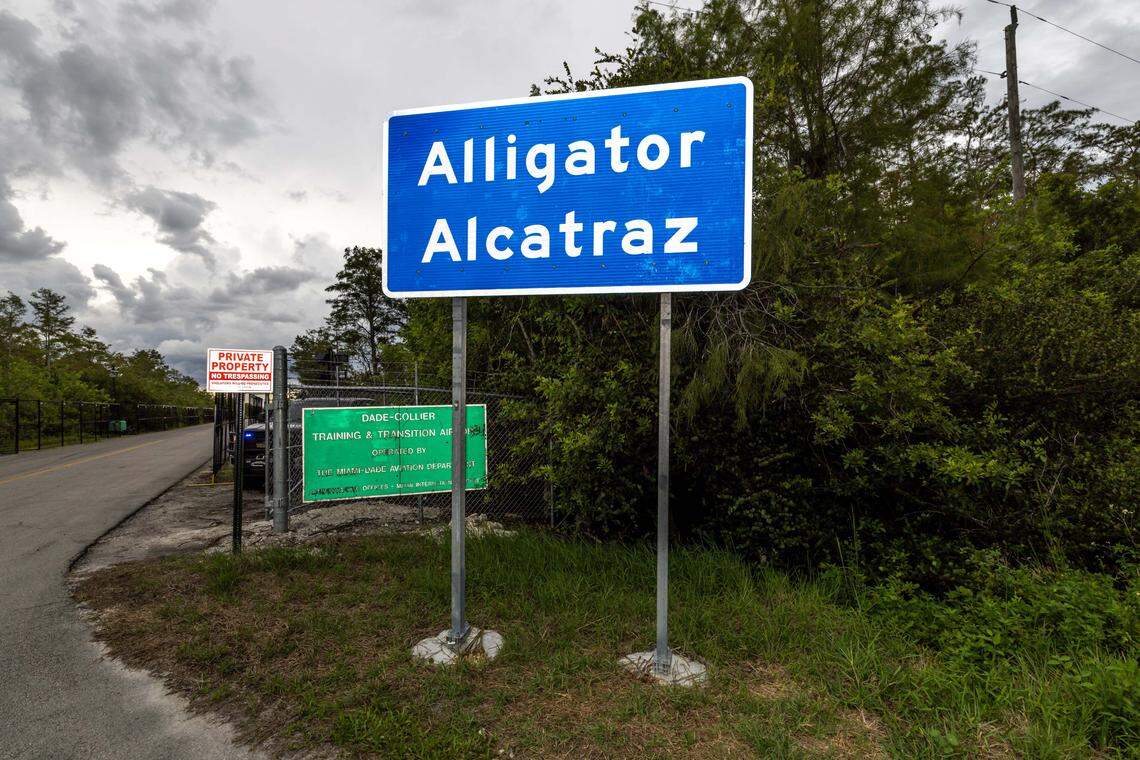
A federal judge issued a ruling Friday requiring the DeSantis administration and federal immigration officials to expand access for detainees to their lawyers at the Everglades detention facility, Alligator Alcatraz.
U.S. District Judge Sheri Polster Chappell issued a 68-page ruling that partially granted a preliminary injunction request, allowing lawyers to visit their clients during visitation hours without a pre-scheduled appointment, increasing the number of phones available to each detainee and requiring the state to publish protocols for lawyer and detainee visits. The ruling also made the ongoing lawsuit against the DeSantis administration’s pop-up immigration detention facility a class action.
Chappell, however, sided with the state on the issue of unscheduled visits by immigration attorneys to the tent site. The civil rights lawyers representing the detainees in the lawsuit had argued that attorneys could not simply show up unannounced during visitation hours at the facility, a policy available at other immigration detention centers.
The state provided evidence to the court at the last minute showing that it had changed its policy and lawyers did not need to preschedule an appointment - a move that Chappell said “blindsided Plaintiffs and the Court.”
Chappell, who was appointed to the bench in 2013 by President Barack Obama, questioned the timing of the evidence and testimony provided by government officials. She, however, agreed it was sufficient and ruled that the plaintiffs could not demonstrate a violation of First Amendment rights based on scheduling in-person visits.
To hold the state and federal government accountable to their policy on allowing unscheduled visits by lawyers to the Everglades detention camp, she ordered the government “to document the unscheduled legal visits policy in writing; publish it on their relevant websites for the public, attorneys, and detainees; and keep the published policies current.”
The order ensures that a lawyer can show up to meet with their client at the site during visitation hours every day of the week without first obtaining permission.
The ruling comes in the ongoing case brought by people held at the facility - who are being represented by the American Civil Liberties Union and other civil rights groups - accusing Florida’s Department of Emergency Management and the Department of Homeland Security of violating detainees’ First Amendment rights to counsel.
Chappell, in her ruling, also pointed out that the plaintiffs had a likelihood of success in their claim that the facility’s policy of recording and monitoring legal phone calls violated the detainees’ First Amendment rights.
She found the government lawyers’ argument that restrictions on legal access and recording of calls were for “order and security.” The lawyers for the government had said, “unfettered access to detainees without proper scheduling would cause chaos” and they also lacked the right number of staff to monitor all requests and calls.
“What they [government officials] fail to do is identify how unmonitored legal calls would threaten the facility’s order and security,” Chappell wrote.
Chapell also found the number of phones accessible to detainees inadequate.
“Two cell phones are merely a drop in the bucket for a facility that can house 3,000 detainees,” she wrote.
She ordered the state and federal governments to provide at least one phone for every 25 detainees to “make timely, free, confidential, unmonitored, unrecorded outgoing legal calls.”
The court also questioned how the state and federal government made their legal access policies known to detainees and their lawyers.
“Since Defendants either do not record their policies or do not update them when changes happen, how can they possibly make protocols accessible to anyone?,” Chappele wrote.
She wrote that the court had reviewed the websites and even searched Google to see what results would come up for “attorney access protocols” at the first-of-its-kind facility. She said attorneys could not find even “basic information” about the facility.
“There is no information on ICE’s website concerning Alligator Alcatraz-not an address, phone number, or email address. Nothing,” she wrote.
Chappell ordered the government to “update and document in writing all protocols for attorney-client communication in English, Spanish, and Haitian Creole, including but not limited to, the detainee handbook, legal visitation policies, and legal phone call policies.”
She also ordered that these policies be made publicly available on the websites for U.S. Immigration and Customs Enforcement and the Florida Division of Emergency Management.
The underlying facts of the case are still to be ruled on, but the partial ruling on Friday was a big win for immigration advocates who had been fighting to shut down the controversial site.
“When a facility obstructs timely and confidential access to counsel, it makes meaningful legal representation virtually impossible,” said Katie Blankenship, Founder of Sanctuary of the South and an organizational plaintiff in this case. “That is not a minor barrier; it is a direct violation of due process. People are left to navigate life-altering immigration proceedings without the ability to communicate with their attorneys. This is unconstitutional and unacceptable. The Court correctly recognized that these policies are unlawful and are inflicting serious harm every day.”
Chappell set a status conference for the remaining case for April.




Posting Komentar untuk "Judge orders Alligator Alcatraz detainees be given more access to their lawyers"